
Kernersville Public Records by Keeper
North Carolina law starts with a broad right to inspect government material, but the Town does not hold every Kernersville file. Municipal staff keep Town business records. County registers keep land instruments and local vital events. County clerks keep trial-court and probate files, while tax and state agencies run their own systems.
| File group | Official keeper | Web coverage | Other access |
|---|---|---|---|
| Deeds, liens, plats | Forsyth or Guilford Register of Deeds | Forsyth names from 1849, images mainly from 1973; Guilford index and images from 1771 | Counter, phone, mail, copy request, archives |
| Property and tax | County tax and GIS offices | Current owner, parcel, address, appraisal, map | Tax counter and phone |
| Court, probate, divorce | Clerk in filing county | Statewide eCourts public docket | Clerk terminal, county file, paid copy, archives |
| Birth, death, marriage | Event-county register or NC Vital Records | No free statewide name index | Application, ID when required, counter, mail, online order |
| Town permits and code | Town of Kernersville | ViewPoint transactions; public index depth not documented | Chapter 132 request, Town Hall, phone |
| Police and custody | KPD, county sheriffs, NC DAC | P2C and current agency lookups | Records desk, phone, targeted request |
| Voter registration | NCSBE and county boards | Individual lookup and free data files | Written county list request, phone, office |
| Business and licenses | Secretary of State, ROD, licensing board | Entity, assumed-name, and board searches | Certified filing from the actual keeper |
Voter access uses the individual state lookup or free current and historical ZIP files. Custom county lists require a written description and cost reimbursement. County offices handle corrections and protected records. See the Kernersville voter registration lookup for file details.
Business access uses Secretary of State entity and assumed-name searches, plus board-specific license tools. Older assumed names and certified copies go to the proper Register of Deeds. Town permits use ViewPoint or a precise request; library directories support older research.
Online access has limits. Juvenile, sealed, expunged, and adoption files remain restricted. Vital copies have eligibility rules. Ballot choices, protected addresses, motor-record data, Social Security numbers, and financial identifiers are not search fields.
Two Counties, Two Records Trails
A Kernersville address does not settle jurisdiction. Most lies in Forsyth County; the east crosses into Guilford. The county tied to the parcel, event, or lawsuit controls the file. A Forsyth-only search can miss a Guilford instrument.
The Town’s request desk cannot supply a deed, estate, divorce decree, or county tax card. Town staff hold municipal permits, code files, board material, correspondence, and Town police records. Registers of Deeds do not hold estates, wills, judgments, foreclosures, or divorce decrees. Those belong with the Clerk of Superior Court.
- Custodian
- The office that keeps and controls a record.
- Index
- A finding aid with names, dates, and citations. It may not include the document image.
- Certified copy
- An official copy authenticated by the keeper, often with a set fee and added eligibility rules.
- Exemption
- A law that closes a record or requires private fields to be removed.
Note: For an unknown county, compare both tax portals before ordering a deed or filing a copy request.
Kernersville Deed Records Have Gaps
The two Register of Deeds systems do not have equal online depth. The Forsyth real-estate lookup route reports name indexes back to 1849, but web images generally begin in 1973. A citation for an older instrument may lead to a book or microfilm copy at 201 N. Chestnut Street in Winston-Salem. Staff can also help by phone at 336-703-2700 or through a mail request.
The Guilford recorded-instrument index reaches the county’s first land record in 1771 with digitized indexes and images. Its disclaimer still makes the Greensboro office record official. The real-estate division is on the second floor at 201 W. Market Street; 336-641-7556 handles phone questions. Guilford’s document form accepts an address, current owner, date, book and page when known, copy type, and mailing details.
Tax and GIS systems can supply a parcel or deed citation, but neither replaces title. County books, State Archives groups, library sources, and FamilySearch may fill older gaps. Historical directories show occupancy, not legal ownership. Both counties offer fraud alerts, but an alert does not guarantee title.
Note: A Forsyth index hit before 1973 may still require a book, microfilm, or office image request.
Kernersville Property Records Search Fields
Property portals are often the quickest way to resolve the correct county and locate a formal citation. The Forsyth Tax Administration hub links the parcel viewer, tax bills, sales, foreclosure notices, and archive routes. The Guilford appraisal system offers three clear search modes. Keep the parcel’s physical, or situs, address separate from the owner’s tax-mailing address.
| Portal field | County | Accepted search | Use |
|---|---|---|---|
| Owner Name | Forsyth | Last then first; partial or last only | Find parcels tied to a name |
| Official Address | Forsyth | Partial with % wildcard; official abbreviation | Resolve an address to a parcel |
| Parcel Number | Forsyth | Full or partial formatted number | Open a known parcel |
| Owner Name | Guilford | At least three letters; Last, First preferred | Narrow an owner list |
| Address | Guilford | Three street letters or address digits minimum | Find the property record |
| Parcel Number | Guilford | Up to seven digits, no leading zero | Retrieve a known parcel |
Forsyth’s viewer can export selected rows to CSV, with a 1,000-result cap. Its mailing-label tool can select parcels by address, geometry, or buffer and create a CSV or 30-label PDF. That is useful for a defined neighborhood or estate notice project, but a mailing address still does not prove that the owner occupies the property.
Kernersville Court Records Beyond Portal
Forsyth and Guilford joined statewide Enterprise Justice during the 2025 completion wave. The eCourts Smart Search guidance covers party, business, case number, location, type, status, and filing dates. Results can show parties, roles, events, hearings, dispositions, assignments, and some judgment detail.
Portal is a web copy, not the official court record. Clerk terminals search criminal, civil, special-proceeding, and estate categories. Inspect the county file or order a copy. Mail requests need the case number, party, document title, and payment instructions. Older files may require the State Archives.
A state judicial agency request cannot replace a county case-file request. Seals, expungements, juvenile confidentiality, and adoption restrictions still apply at the portal, terminal, and counter.
Kernersville Vital Records Need Orders
North Carolina does not publish a free statewide vital-name index, and official sources do not use a simple rule that every certificate opens after a set number of years. Birth, death, and marriage records begin with the Register of Deeds in the event county. The state office fills statewide gaps and supplies divorce certificates, while the full divorce judgment remains with the filing-county Clerk.
The NC Vital Records order service shows the state certificate choices and paid order channels.
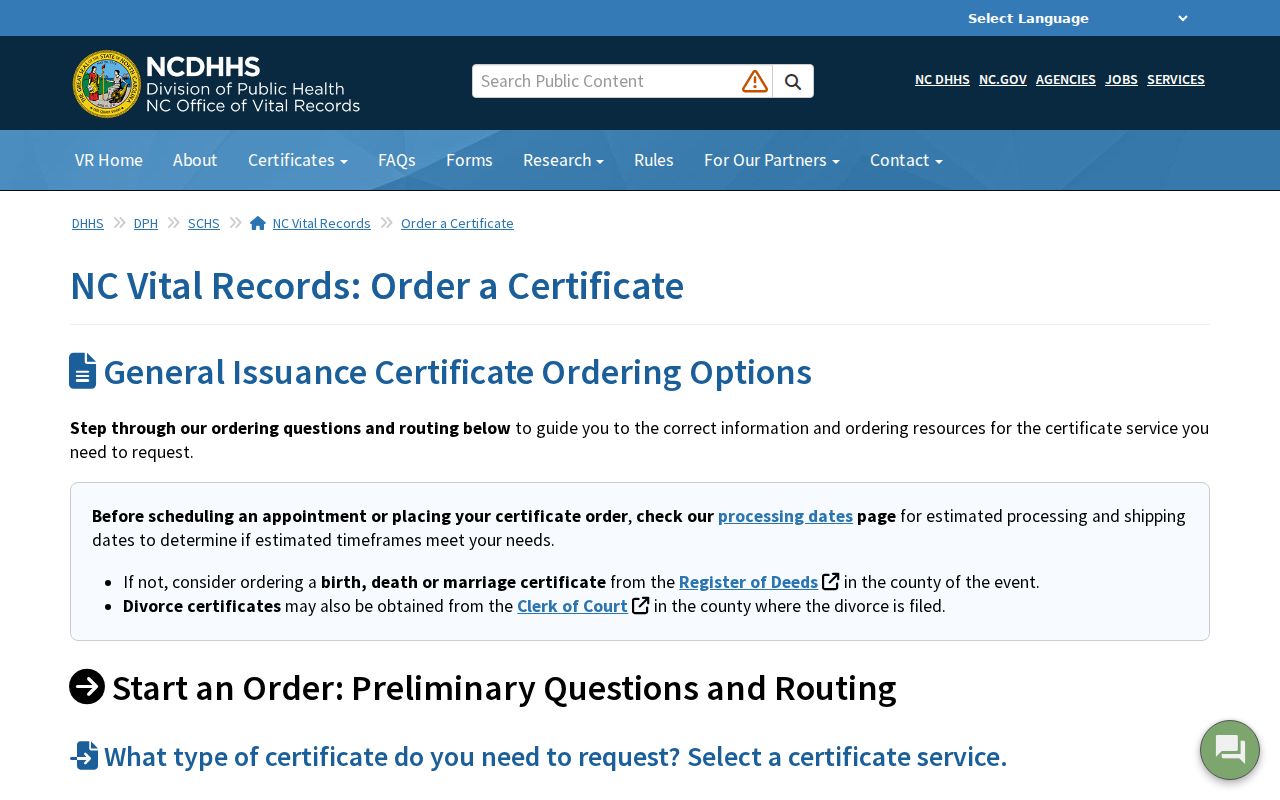
State holdings begin with births in 1913, deaths in 1930, marriages in 1962, and divorces in 1958. The standard search and first certificate cost $24.
The Forsyth vital-copy instructions set out eligibility, identification, and walk-in, mail, and online routes.
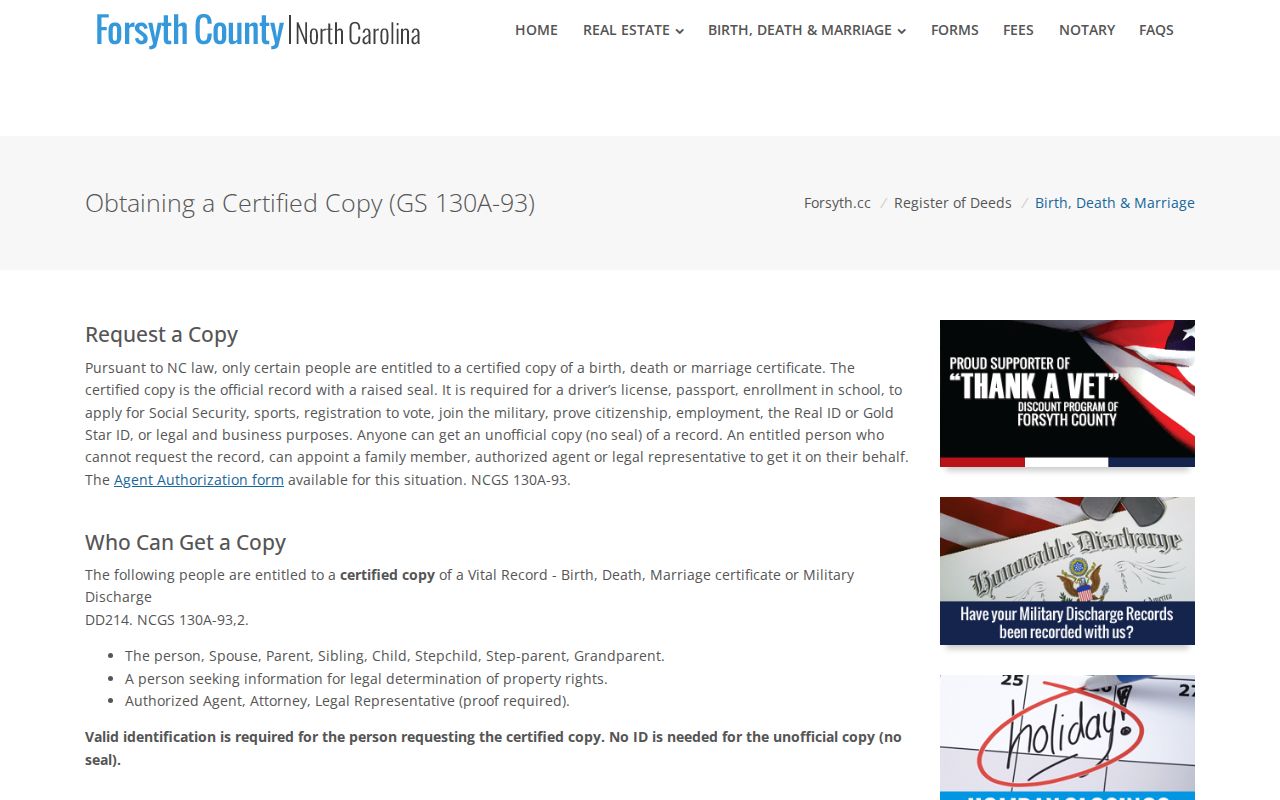
Forsyth charges $10 certified and $0.50 unofficial. Walk-in service is same day; mail normally takes two to three business days. Guilford charges $10 certified, while uncertified copies cost $0.05 per page in person or $1 by mail. Historical channels include county books, archives, churches, cemeteries, newspapers, and library genealogy sources.
Note: An uncertified research copy is not a certified legal certificate, even when both come from the same event record.
Kernersville Police and Custody Records
Kernersville Police Records maintains accident, incident, and arrest reports, warrants data, citations, subpoenas, and fingerprints. The Police2Citizen service is the first report-search channel.
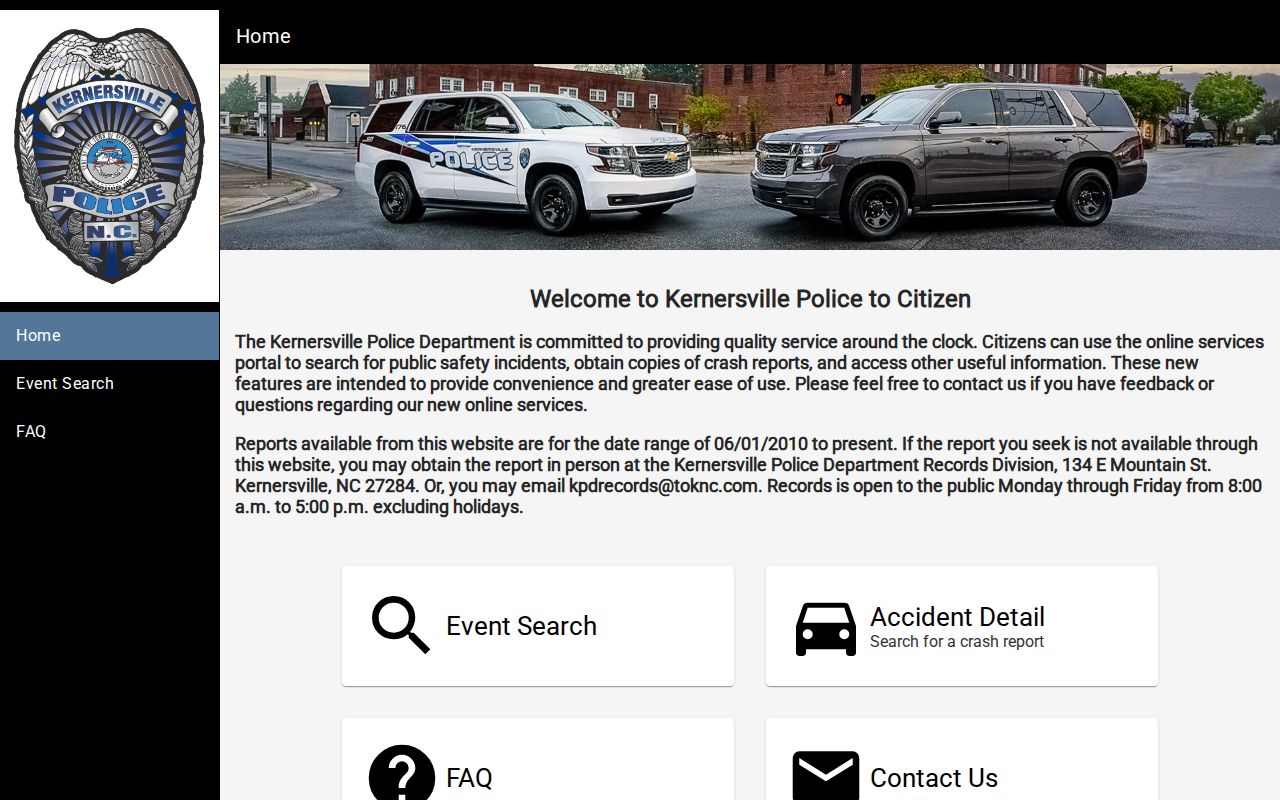
Reports may take 24 to 48 hours after officer filing to appear. Public narratives are brief and sensitive or third-party identity data may be redacted. When the web search fails, call the Records desk at 336-996-2366 or visit Stockton Law Enforcement Center, 134 E. Mountain Street, weekdays from 8 a.m. to 5 p.m. A clerk may search without the report number.
Custody records follow the agency that holds the person. County detention depends on Forsyth or Guilford. The NC DAC offender search covers state prison, probation, and parole status by name or offender ID. The NC SBI registry has name, address-radius, coordinate, and registration-number modes. Its entries describe currently published registry status only and must not be used to harass anyone.
Kernersville Public Records Office Routes
Counter service matters when an image is absent, a certified copy is needed, or staff must confirm the index. Court files go to the filing-county Clerk, while statewide vital orders go to NC Vital Records.
Town Records Desk
134 E. Mountain Street, Kernersville, NC 27284
336-996-3121, weekdays 8-5
Forsyth Register of Deeds
201 N. Chestnut Street, Winston-Salem
336-703-2700, weekdays 8-5
Land instruments and local vital copies
Guilford Register of Deeds
Greensboro and High Point offices
336-641-7556, weekdays 8-5
Land instruments and local vital copies
Kernersville Police Records
134 E. Mountain Street, Kernersville
336-996-2366, weekdays 8-5
Public portions of identified Town reports
Property questions go to Forsyth Tax at 336-703-2300 or Guilford Tax at 336-641-4814. Town permit, inspection, code, mapping, and addressing questions go to Development Services at 336-996-7166. Give a file type and date range.
Private Fields in Kernersville Records
Chapter 132 does not turn every government-held field into open data. North Carolina law protects Social Security and tax identification numbers, driver and passport numbers, bank and card numbers, and access credentials. Otherwise open material should be produced with those fields removed. Federal motor-record privacy rules also sit outside the ordinary state access rule.
Under N.C.G.S. §130A-93, certified vital copies are limited to the person, listed family, someone establishing a personal or property right, or an authorized representative. Voter files omit full birth dates, identity documents, email, and protected addresses. The Address Confidentiality Program supplies qualifying survivors a substitute address. Section 132-1.10 allows a signed, no-fee request to redact one’s own identifier from a precisely identified Clerk or Register of Deeds image.
Use records lawfully. Open access does not permit stalking, threats, or repeated harassment. North Carolina law can punish a course of conduct that causes reasonable fear or substantial distress.
Kernersville Records Fees and Limits
Under §132-6.2, an uncertified copy fee cannot exceed the direct cost of reproduction. Ordinary agency costs are excluded. A custodian may add an actual-cost special-service charge for extensive clerical, information-technology, or supervisory work, or for an unusually demanding medium. The requester may choose a medium the agency can supply.
Town letter or legal pages cost $0.15 in black and white or $0.25 in color. An 11-by-17 page costs $0.20 in black and white or $0.30 in color. A burned CD costs $1, while postage, packaging, and outside-vendor work use actual cost. Payment comes before delivery. If no pickup or payment plan is made within ten business days after notice, the Town treats the request as abandoned.
Guilford land certification costs $5 for the first page plus $2 per added page. Payment never widens access to a restricted file.
Note: Ask whether a quoted charge is reproduction, certification, postage, or special service before paying it.
Requesting Kernersville Public Records
Any person may inspect and copy qualifying government material at reasonable times. North Carolina has no residency or purpose test and no fixed response period. Section 132-6 requires action “as promptly as possible.” A custodian may point online, seek clarity, or require a database request in writing. It need not create a record.
- Resolve the keeper. Separate Town material from Forsyth, Guilford, court, and state files.
- Search first. Save a parcel PIN, book and page, case number, report number, or exact event details.
- Describe an existing record. Give names, dates, file type, date range, and the medium you can use.
- Use the right channel. The Town accepts web, emailed PDF, or Town Hall delivery; other keepers use their portal, counter, mail, or application.
- Review cost and response. Pay valid copy or certification fees, or narrow a request that would require extensive service.
The Town form asks for contact details, a precise description, delivery choice, signature, and date. Request permits, inspections, and code files by address, type, and date when ViewPoint does not expose a result. For police material, seek the public portion of an identified report.
When Kernersville Records Are Denied
A denial should state its legal basis, and the custodian must provide that explanation in writing when asked. A narrow response may be proper if private fields must be redacted or if part of a case is sealed. It is not proper to route a request to the wrong office and treat that failure as proof that no record exists.
The NCAOC public-record request form is for records held by the state judicial agency, not a shortcut to local case files.
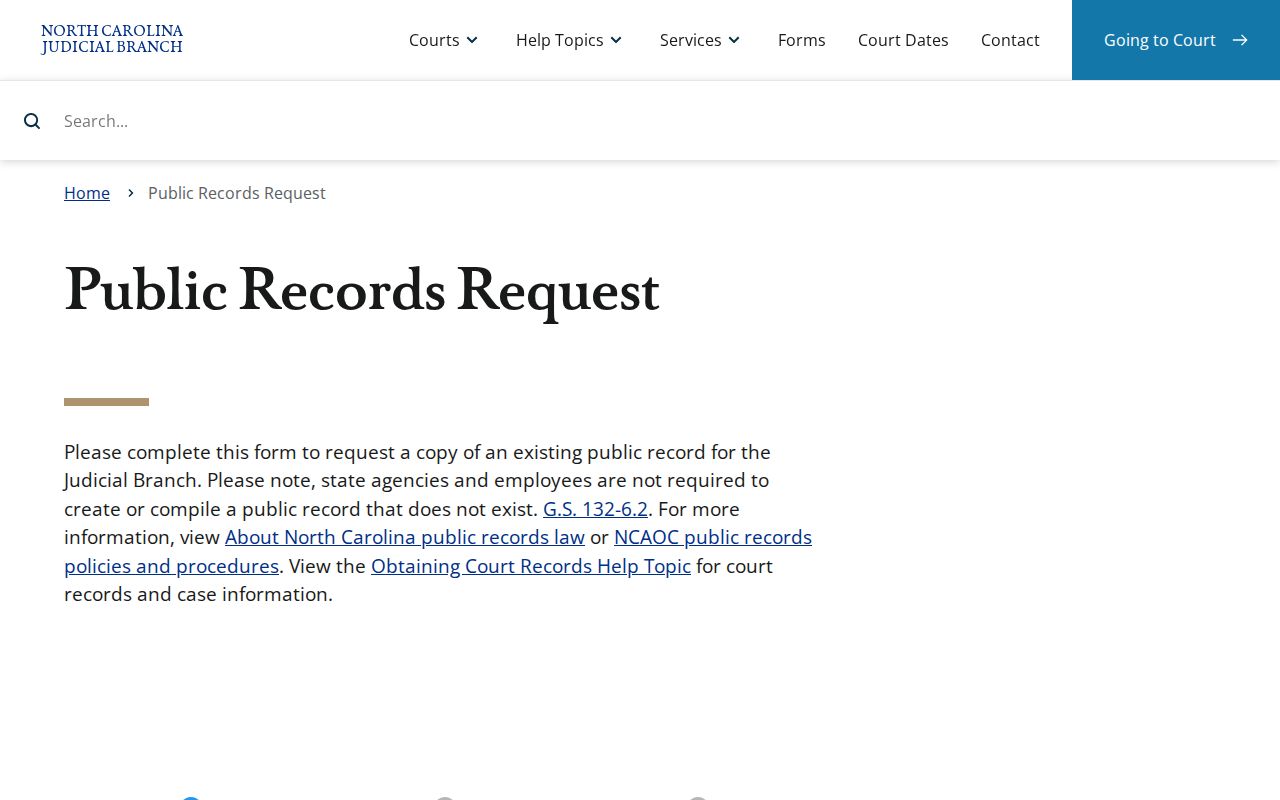
Its requester fields illustrate the value of names, contact details, and a focused description. County case documents still come from the filing-county Clerk through Portal, terminal, file inspection, or a copy order.
When a Chapter 132 dispute remains, N.C.G.S. §132-9 permits an action to compel disclosure after mediation under G.S. 7A-38.3E. Form AOC-CV-830 records the parties, holder, dispute, and litigation status. The parties select a mediator within 21 days or the clerk or judge appoints one. The written denial often reveals whether to narrow the request, change custodians, mediate, or seek enforcement.